
Not all superheroes wear capes; many wear scrubs, or even everyday clothes. Caregivers come in many shapes, sizes, career paths, and ages.
And they are all worth their weight in gold.

Healthcare professionals. Personal Care Assistants (PCAs). Foster parents. Adult children caring for aging parents. Spouses supporting a loved one through dementia. Professional counselors. Hospice workers.
If you spend your days caring for others, there’s a good chance you’re quietly carrying more than anyone realizes.
Caregivers often become experts at noticing everyone else’s needs while overlooking their own. They push through exhaustion, ignore stress, postpone doctor’s appointments, skip meals, and convince themselves they’ll rest “when things calm down.”
But what happens when they never do?
You Can’t Pour From an Empty Cup
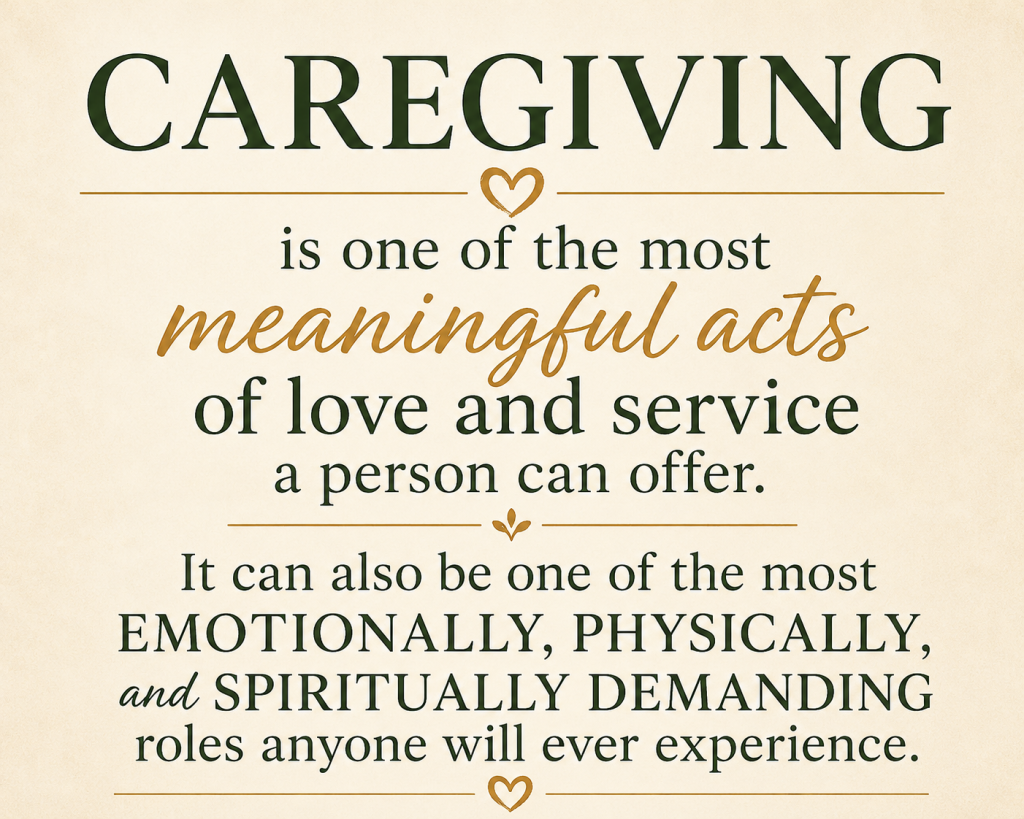
Caregiving is one of the most meaningful acts of love and service a person can offer. It can also be one of the most emotionally, physically, and spiritually demanding roles anyone will ever experience.
The National Institute on Aging reminds caregivers that caring for themselves is one of the most important things they can do, not only for their own health, but for the person depending on them. Chronic stress, sleep deprivation, anxiety, depression, and burnout are all common among caregivers.
Whether you’re helping patients through a twelve-hour hospital shift, caring for children who have experienced trauma, or helping a parent who no longer remembers your name, your well-being matters.
Caregiver Burnout Is Real
Burnout rarely happens overnight.
Instead, it quietly grows through:
- Feeling emotionally exhausted every day.
- Losing interest in activities you once enjoyed.
- Difficulty sleeping or sleeping too much.
- Feeling guilty whenever you take time for yourself.
- Becoming impatient or emotionally numb.
- Living with constant worry or overwhelm.
- Feeling isolated because “no one understands.”
Many caregivers assume these feelings are “part of the job.”
They aren’t.
They’re signals that your body and mind need care, too.
Advocate for Yourself
Caregivers spend much of their lives advocating for others. Sometimes the hardest person to advocate for is themselves.
Self-advocacy may look like:
- Saying the words “I need help.”
- Telling your healthcare provider when you’re struggling.
- Asking siblings or family members to share caregiving responsibilities.
- Using respite care without feeling guilty.
- Setting healthy boundaries with work or family.
- Taking mental health days when possible.
- Saying, “I need help.”
Remember, asking for support isn’t weakness.
It’s wisdom.
Asking for help today often prevents a crisis tomorrow.
Small Acts of Self-Care Matter
Self-care doesn’t always require a weekend getaway or expensive retreat.
Sometimes it begins with five intentional minutes.
Consider:
- Taking a short walk outside.
- Scheduling your own medical appointments.
- Eating regular, nourishing meals.
- Practicing deep breathing or prayer.
- Journaling difficult emotions.
- Staying connected with supportive friends.
- Meeting with a counselor or therapist.
- Joining a caregiver support group.
These small habits create resilience that allows caregivers to continue serving others without sacrificing themselves.
You Don’t Have to Carry This Alone
One of the greatest gifts caregivers can give themselves is connection.
Support groups remind us that we are not the only ones asking hard questions, grieving changing relationships, or wondering if we’re doing enough.
If you’re caring for someone with Alzheimer’s disease or another form of dementia, organizations like the Alzheimer’s Association offer local and virtual support groups, educational resources, and a free 24/7 Helpline for caregivers. The National Institute on Aging also provides practical caregiving guides and resources for navigating every stage of dementia care.
If you’re caring for an aging parent, the National Council on Aging provides trusted information on healthy aging, caregiving, benefits, and community resources that can help lighten the load.
Helpful organizations include:
- National Council on Aging (NCOA) – National Council on Aging
- Alzheimer’s Association – Alzheimer’s Association
- National Institute on Aging Caregiving Resources – National Institute on Aging Caregiving Resources
- Family Caregiver Alliance – Family Caregiver Alliance
A Final Word
At Shepherd Way Counseling Associates, we believe every caregiver deserves the same compassion they so freely extend to others.
If you’re feeling overwhelmed, emotionally depleted, or simply weary from carrying so much for so long, know this:
You don’t have to earn rest.
You don’t have to apologize for needing support.
And you don’t have to walk this journey alone.
Caring for yourself isn’t taking away from those you love—it is one of the greatest gifts you can give them. Because when caregivers are supported, healthier, and emotionally grounded, everyone they care for benefits as well.


